Sunday, October 26, 2014

Visit to Museum of Science, Boston

Museum of Science is one of the best places to visit in Boston for the nerdy minds. It has got huge amount of information, models, dioramas and lot more that can be explored in a single day's trip. This is one of the best places for family outings on weekends (if majority of the family members are science freaks). Here is the official link for the museum.
Few exhibits that I would recommend you to visit for sure are:
  • A movie at the Mugar Omni theater (if you have already not seen one). Guys it is a mind blowing experience to watch wildlife movie (or a documentary) film on that screen.
  • Theater of Electricity. Explore lightning and storm safety as the world's largest air-insulated Van de Graaff generator hurls indoor bolts.
  • Hall of human life. You get to know lot of striking features about human body. The museum has got lot of scientific machines that we can feed in with information regarding our body and those machines would analyze the information and return back results which help us understand the health of our body.
  • Live animal care center. Though this is not a very huge place and does not have a huge bunch of animals (remember it is a care center) but the kind of animals that you find there are very interesting to see and study.
  • New England habitats. This section contains life size models of different animals that live (or once lived) in and around New England (Boston).
As I have being doing with my other Boston blogs following are few pictures of various sections that I was able to visit. For each exhibit there is a plate with descriptions that give more information about the exhibit. I have tried to add those descriptions under each picture.
Desert Tortoise
Description: Also called “gopher tortoises”. These tortoises earned their nicknames from their habit of digging large underground borrows to survive the extreme temperature of deserts. They can go a year or longer without any access to water by storing urine in their bladder and reabsorbing the liquid during dry seasons.

Amazon Milk Frog
Description: Also called mission golden-eyed tree frogs, Amazon milk frogs are named for the poisonous white milky liquid they secret when threatened. They are most active at night, and are known for their loud night time vocalizations. Amazon milk frogs rarely leave in the tree canopy. By using their loud snouts (the projecting nose and mouth) to push aside leaves and branches they are able to squeeze into tight hiding places during day.

Madagascar Hissing Cockroach
I was not able to find any description for the Madagascar Hissing Cockroaches but can say that they are very creepy to watch and hence the description was not needed.

Bearded Dragon
Description: The bearded dragon gets its name from the loose skin with spiky scales under its chin. Males and females push these “beard” forward when threatened. Bearded dragons are omnivorous (feeding on food of both plant and animal origin); their stomachs accommodate large amounts of food, helping them survive in areas where there food is scares.

Black Bears
Black Bear
Description: Black Bears are the only bears native to New England (Boston). Adults weigh between 200 to 500 pounds (approx. 90 to 226 Kgs) and can live more than 25 years. They can be found from Northwestern Connecticut to Canada. Not all Black Bears are black. The cinnamon-colored cub (second picture above) is also a Black Bear. Black Bears prefer plants over meat despite their long claws and sharp teeth.

White-tailed Deer
White-tailed Deer
Description: White-tailed deer can be found throughout New England (Boston) wherever there are woods and open pastures. In the wild, deer can weigh from 100 to 250 pounds (approx. 45 to 113 Kgs) and live about 12 years. Deer are plant eaters. They consume an amazing variety of buds, leaves, shoots and more.
American Moose
Description: Moose are the largest land animals in North America. A bull moose may stand seven feet high at the shoulders, weigh more than 1,500 pounds, and live about 15 years. For most of the year, moose lead a solitary and peaceful life. In spring, the male’s antlers begin to grow. By autumn, the antlers are fully grown and the moose is ready for mating season. Come winter, his antlers fall off. He will grow a new set next year.

Earth
An interesting real life model of Earth has been created and kept for display. The model tries to reflect the mountain ranges that we have on Earth in a scaled down manner.

Ichthyosaur Fossil
Description: It looks like a fish but this Ichthyosaur is a reptile. Living in the time of dinosaurs, Ichthyosaurs became so well adapted to their ocean habitat that they evolved a shape similar to sharks and other fish. Note that there is no skeletal component of the top fin, only the outline of soft tissue preserved with this fossil.
Game of Shadow
The numbers are arranged in such a way that if the shadow created out of them shows a child’s silhouette.
Ancient Foot Steps
Description: These footsteps are from Tanzania, Africa and are supposed to be 3.6 million years old. Individuals from a species of ancient humans called Australopithecus afarensis walked over a layer of wet volcanic ash. Their fossilized footprints show us that they walked on two legs, just like we do.

Nariokotome Boy
Nariokotome Boy
Description: This is a model of a fossilized skeleton of one of our ancient human ancestors who lived about 1.6 million years ago. He is named after the site near Nariokotome, Lake Turkana, Kenya, where he was discovered. He could walk for miles. Scientists think that his tall body, long legs, and narrow pelvis allowed him to efficiently travel many miles, hunting animals for food, without burning many Calories. Based on his teeth his age is considered to be 8-9 years at the time of his death. His height is 5 feet, 3 inches or perhaps 6 feet if he had reached his adulthood and weight 106 pounds or 150 pounds if he had reached his adulthood.

Museum Floor
Above is a quick glimpse into the one of the bustling floor of the museum.
Below are the clicks from a section called “Seeing Is Deceiving”. These are portraits that convey different images if you focus on different parts of them.
At first glance you might see a solider on horse fighting with a dragon or you might as well see a face…

This very simple looking vase revel two talking heads when you look at the vast from certain angle.
There are quite a few other such images and objects as well which one has to focus on to find different aspects hidden in them.
The Gaur Tablet
Description: This reproduction of the earliest known map, a clay tablet approximately 4,200 years old, records the size and location of a large plot of land. It was probably made when the land was sold to a new owner. The original map was discovered during a 1930-31 excavation by Harvard University at the mound of Yorghan Tepe, site of the ancient town of Gasur near the modern city of Kirkuk in northern Iraq. A cast was made of the original before it was returned to the Iraq Museum in Baghdad.
And for the lovers of cars the museum also has got miniatures of different cars with their descriptions. Following are the ones that I like.
Roper Steam Carriage 1863
Rolls Royse Silver Ghost Car 1926
Wasp Major Plane Engine
Description: The Wasp Major was the world’s most powerful piston airplane engine – the last and largest before the introduction of turbines and jets. This is a real Wasp Engine, but some of it has been cut away to reveal the parts. At first look I was not able to find our the piston in-spite of it being so huge.
Late Cretaceous – 67 million years ago, Hell Creek Formation
Description: Formations are layers of rock that were deposited during specific time periods. The Hell Creek Formation occurs in portions of Montana, and in North and South Dakota. It is significant because it is a fossil-rich layer from the Cretaceous Period, the end of the Mesozoic Era, about 65 million years ago.
Triceratops Horridus
Few facts, Length of body 22 feet, length of head 6 feet, height 9 feet, skull weight 800 pounds, fossil weight 2000 pounds live weight 12,000 pounds and surprisingly diet is supposed to be plants – mostly palm-like cycads.

Above clicks and the sections that I have covered are just a small amount of exhibits that I was able to grab in form of pictures and put here. As per my understanding it is very difficult to cover details of all the sections. Apart from this there are few sections and exhibit for which we cannot click any picture and hence we need to view the exhibit personally. Whenever in Boston do plan a visit to this place.

Tuesday, August 5, 2014

Visit to New England Aquarium, Boston (Part 1)

It was an amazing experience for me to visit the New England Aquarium. New England Aquarium is located at the Central Warf of Boston port line and is very famous for the variety of sea animals that it hosts. Surprisingly it is one of those rare aquariums having a very detailed website. Individuals can plan their visits by browsing this site as well.

In this "Part 1" post I have mostly covered clicks Jelly fish and a bunch of anonymous small fish. One of the exhibits that I liked the most was Shark and Ray touch tank. Unfortunately I was not able to take any clicks because the tank is pretty much at ground level and in this particular case it is not the picture that matters but the experience. They have got like 30-40 baby Rays swimming in a tank and you can touch those swimming Rays and Sharks. Believe me they don’t bite and it is a hell of an experience.

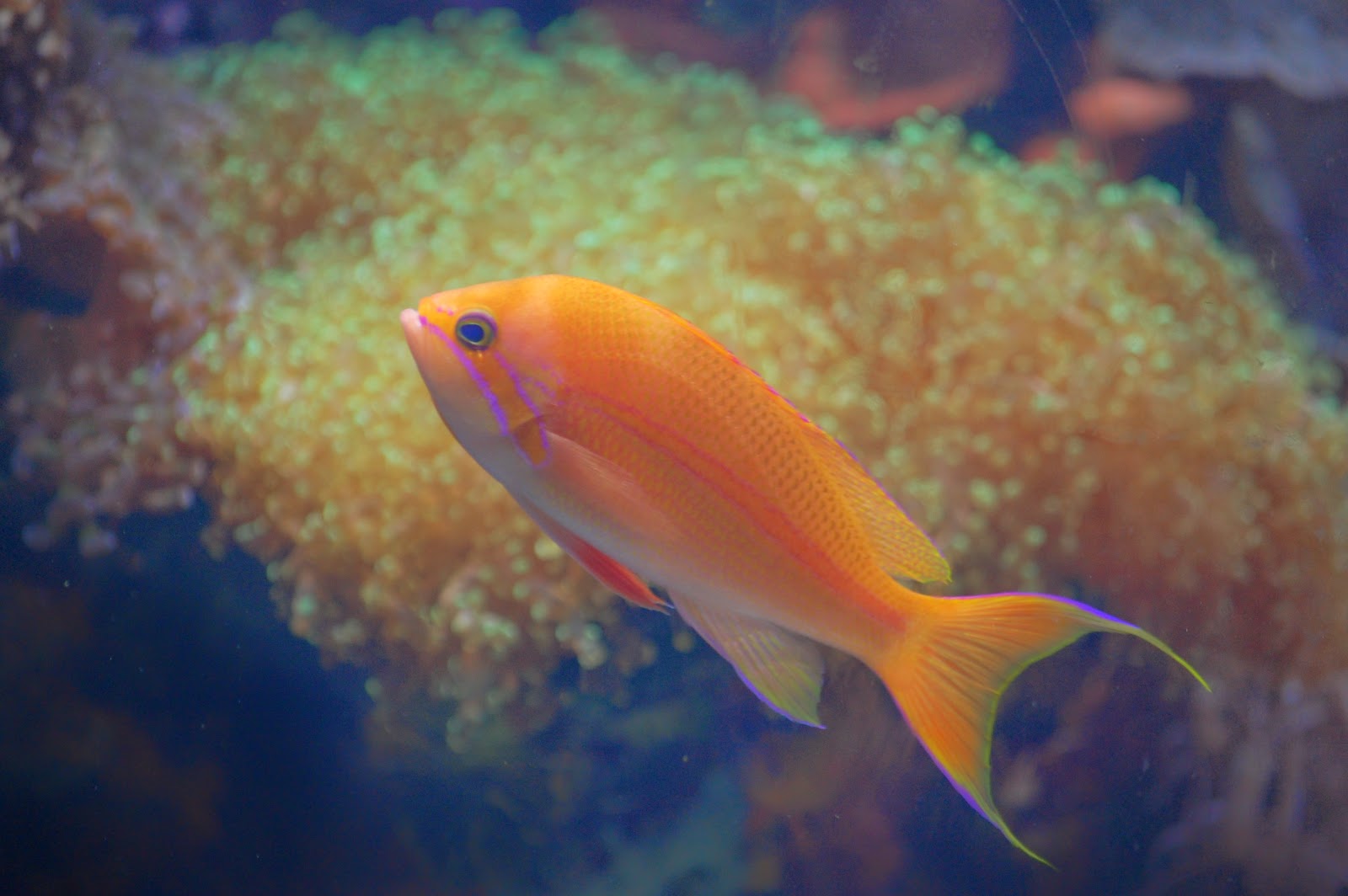
Just opposite to this Shark and Ray touch tank you would find another tank that has a variety of small and colorful fish. It is just like watching the entire sea bed in “Finding Nemo” movie come alive in front of you. Below are few of the clicks that I was able to grab. I am not a fish expert so I was not able to name all the below listed fish but they are very colorful and nice to watch. Any comments regarding their names would be helpful for me to put a caption for them.

Marine Fish


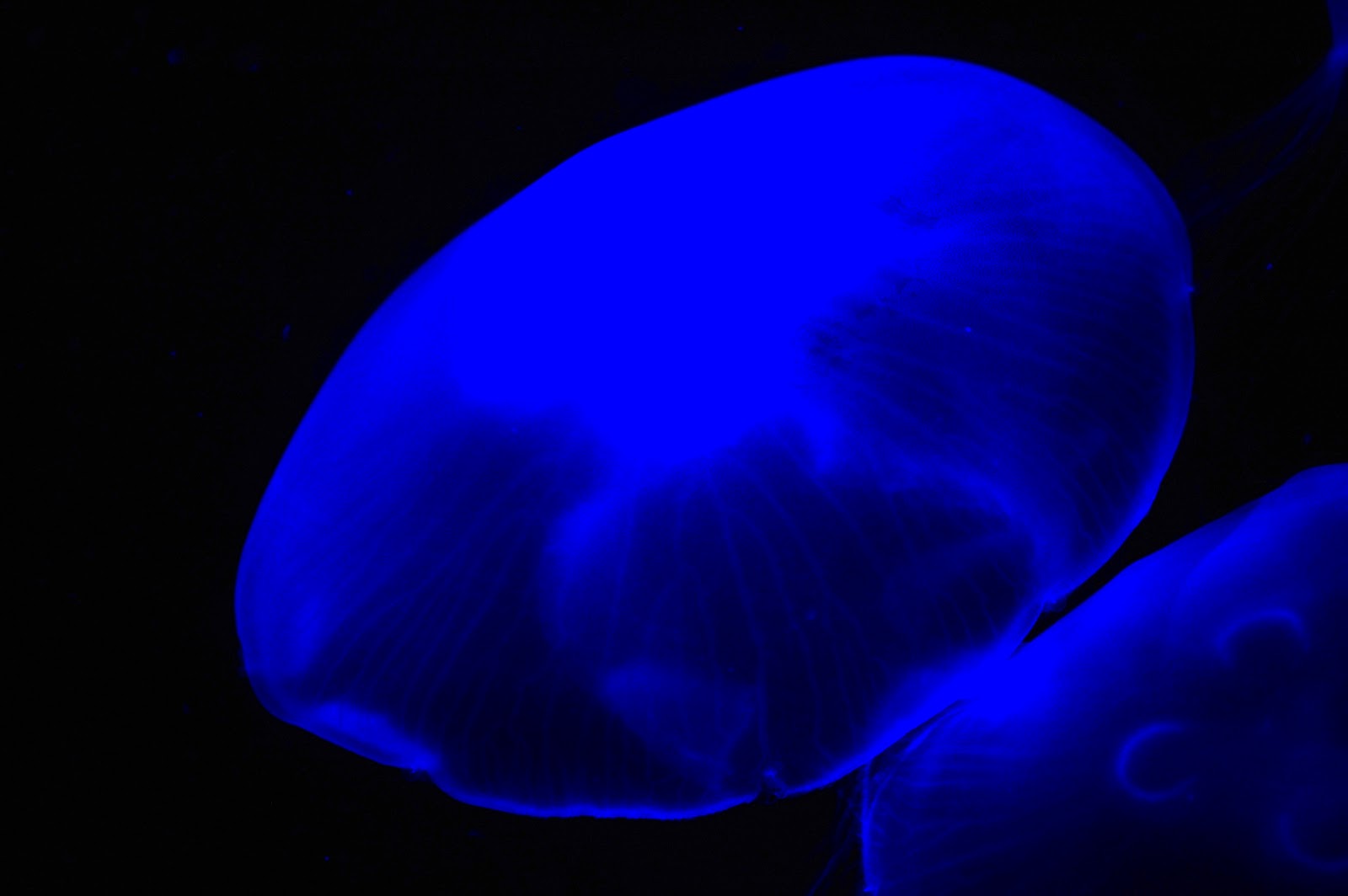
Below are few clicks of different kind of jelly fish that are maintained by New England Aquarium. Every type of jelly fish is kept in separate tank with a name plate having description about the jelly fish. I have tried to list them as per their type and as well have tried to put the description present on the name plates so that it becomes more interesting to read.

The European Moon Jelly (this is one of my favorites)


Description: Moon jellies are found worldwide and are commonly seen in New England waters. They are important consumers of zooplankton.

Japanese Sea Nettle


Description: These are often found in swarms in temperate zones of the North Pacific Ocean. They can be seen both on the ocean surface and in deep water.

Blue Blubber

Description: These Australian jellies are also referred to as "edible jellyfish" and are used in several Asian cuisines. They are also used to treat arthritis in traditional Chinese medicine.

Australian spotted jelly

Description: These natives of warn Australian waters and the Indo-Pacific have been accidentally introduced into warm Atlantic Ocean waters. They have been sighted throughout much of the Gulf of Mexico, in Puerto Rico and on the east coast of Florida.

Mediterranean jelly


Description: No details regarding this jelly fish were listed on the aquarium plate hence I tried to search on web for its details. In this process I stumbled upon following link which lists down different jelly fish and their details. These are the details that I got for Mediterranean jelly fish "Very abundant in the Mediterranean Sea, especially in bays. In 2009 it was more frequent in the southern part of Italy, showing a preference for warmer waters, but this was not confirmed in 2010 and 2011, since this species was very frequent throughout the whole Italian coast, especially in the second half of the summer."

Atlantic sea nettle


Description: These nettles are the summer residents of the East Coast, commonly ranging from both coasts of Florida to southern New England. Juvenile harvest fish and butter fish are often found swimming in the tentacles of the jelly fish.

Pacific sea nettle

Description: These nettles are often found in large groups called smacks, in the northern temperate Pacific Ocean. They can be seen both on the surface and deeper waters.

Monday, August 4, 2014

Visit to New England Aquarium, Boston (Part 2)

This is a post in continuation of my previous post "Visit to New England Aquarium (Part 1)". In this post I have listed clicks of:
  • Penguins
  • A whale skeleton
  • Longnose Gar
  • Red bellied Piranha
  • Dying poison arrow frog
  • Green sea turtle
  • Northern Fur Seal and
  • Few anonymous fish

The descriptions are majorly taken from names plates kept in front of individual fish tanks in the aquarium.

The Aquarium is home to more than 80 penguins who live in a bustling colony found on Level 1 of the aquarium surrounding the Giant Ocean Tank. The Aquarium breeds African penguins as part of a species survival plan and promotes education programs about penguins.

African Penguin


Rockhopper Penguins


Apart from the Giant Ocean Tank one of the eye catching monument that you get to see once you enter the aquarium at level 1 is huge skeleton hanging from the ceiling. It may look like a dinosaur skeleton, but it is actually the skeleton of a juvenile North Atlantic right whale. The Right Whale Research Blog describes a lot about these incredible, but unfortunately critically endangered, animals.

35 feet whale skeleton

The Aquarium estimates that there are only about 430 individuals of this species still around. In fact, the name right whale comes from the fact that they were considered the right whale to hunt, due to their slow movements and the fact that they float after they’re killed. I picked up these details from the New England Aquarium site page.

Longnose Gar


Red bellied Piranha


Description: All 20 or more Piranha species are equipped with powerful, vice-like jaws. Some such as the red bellied here, use knife like teeth to slice the flesh of their prey. Other species of Piranha crush seeds, fruits and nuts.

Dying poison arrow frog

Description: Frogs live everywhere in the Amazon, from the depths of river to the heights of forest canopy. Wherever they go they somehow find a watery place to mate and reproduce.

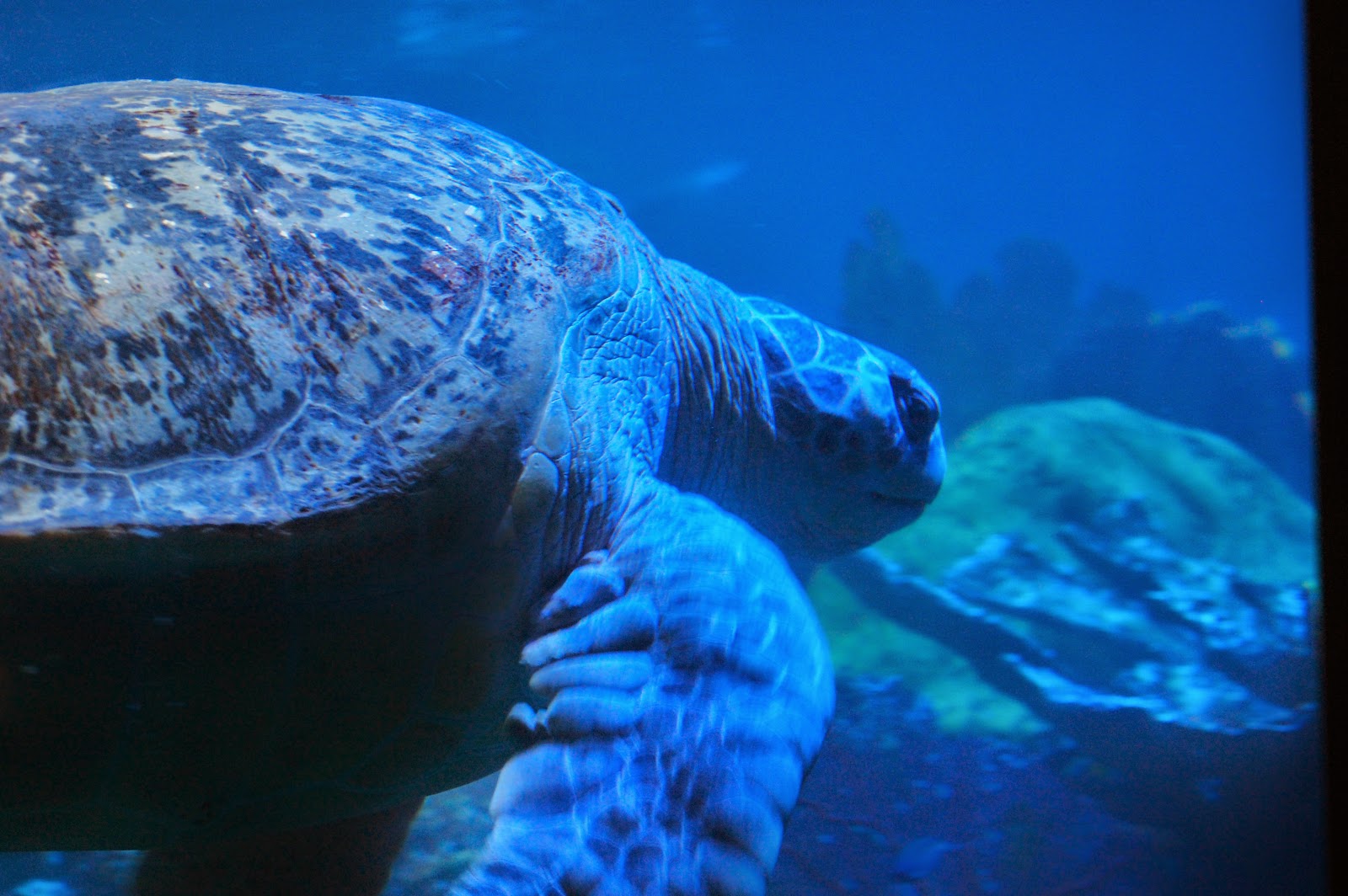
Green sea turtle 


Though above clicks may not indicate the actual size of this turtle but as a note I would like to mention that this is a very big turtle and watching it swim in the  Giant Ocean Tank (with all live coral around it) is a marvelous experience. More details regarding this species of turtle on New England Aquarium link.

Northern Fur Seal Swimming upside down

Northern Fur Seal About to dive under water

Anonymous Turtle


Anonymous Fish


As I have mentioned in my previous post for New England Aquarium, there are lot more species of fish to watch and experience than what I have listed in my two posts here. Usually you don't even get to take pictures of all of them due to light conditions. Don't miss an opportunity (in case you get one) to visit this place.

Sunday, August 3, 2014

A Visit to Methuen Memorial Music Hall, Methuen

This is the first post in a list of posts that I am planning to do for my Boston visit. Hopefully I would try to cover and post as much photos I can. This post is about my visit to a small town called Methuen which is close to the town of Waltham where I was staying. The entire credit (of course excluding that of photographs) of this visit and details that I have put in this post goes to Mr. Vikrant Gogri without whom this visit would have not been possible. In fact without whom my entire Boston visit would have been an utter boredom and just official work. It was Vikrant who told me about this place and a special musical event that he was planning to attend in the evening. As it was a musical event I happily agreed and then we started our drive from Waltham to Methuen.
Below is the click of majestic  piano (if I may call it in simple words and as Vikrant described it to me initially). This majestic piano is called as “The Great Organ” and you can get the entire details regarding it from following official site.
The Methuen Memorial Music Hall with 'The Great Organ'
Just so that you don’t end up making the same mistake that I did when I first saw it, the reason I called it majestic is because of its structure. The organ is not just the table with keys kept on the center stage but it also consists of the celestial metal pipes that you see in the click. When the musician operates keys on the so called piano, air is blown through those metal pipes and then sound is produces. Now you know what I am talking about. It is just amazing to listen to those notes.
Once you enter the musical hall you could still get the glimpse of old architecture that decorates the entire premises. Below are few clicks depicting the same.
Hall Ceiling

Hall Ceiling
On both side of the wall we could see carvings of Edward F. Searles who purchased the Great Organ and built this hall for it.
Edward F. Searles
Nice wooden carvings can be seen all over the stage and around the musical organ.
Wooden Carving

Wooden Carving

Wooden Carving
Below are the clicks that allow us to take a closer look at the key board of the instrument. Yet another stunning fact about the Great Organ is while playing the musician not only operates the keyboard but also have to manage the numerous paddles that are located below the keyboard. So it is the combination of hand and leg movement which produces the music.
Keyboard with Paddles

And here is the man of the day Mr. Vikrant Gogri.


Finally the stone plate in front of the hall.
Stone Plate
To actually admire the beauty of this instrument one should hear it. No modern instrument can produce the kind of soothing music that this instrument produces. Once again thanks to Mr. Vikrant Gogri for allowing me to accompany him for this memorable event.